Introduction
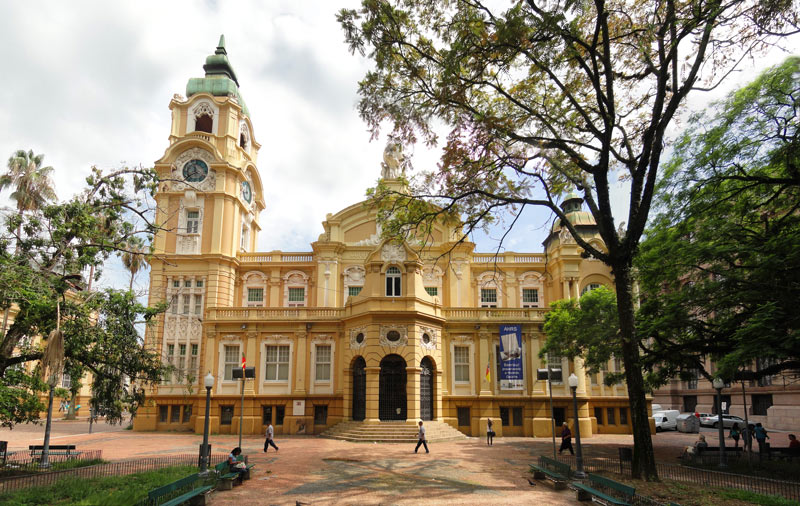
Varela Digital is a digital scholarly edition and knowledge-oriented research environment dedicated to the correspondence preserved in the Varela Collection, held by the Arquivo Histórico do Rio Grande do Sul. Developed within a broader historical investigation of the Farroupilha Revolution (1835–1845), the project publishes a representative portion of this corpus through TEI/XML encoding, structured metadata, and semantic modelling.
The Varela correspondence offers a privileged perspective on how the rebellion was governed and negotiated in practice: orders, requests, mediation, and administrative routines appear side by side with private communication. In particular, the letters make visible the transregional dimension of the conflict by documenting cross-border networks linking Rio Grande do Sul to Uruguay and the wider Río de la Plata world.
The edition is based on the printed transcriptions published in the Anais do Arquivo Histórico do Rio Grande do Sul. While the collection comprises more than 550 documentary units, this project focuses on a pilot corpus of 300 documents (CV-1 to CV-300), starting from Volume II (1978), the first Anais volume to publish Varela materials. Beyond access to texts, Varela Digital models persons, places, events, and relations across documents using Linked Open Data, enabling navigation, indexing, and future spatial and network visualizations grounded in historical interpretation.
The Farroupilha Revolution (1835–1845)
.jpg)
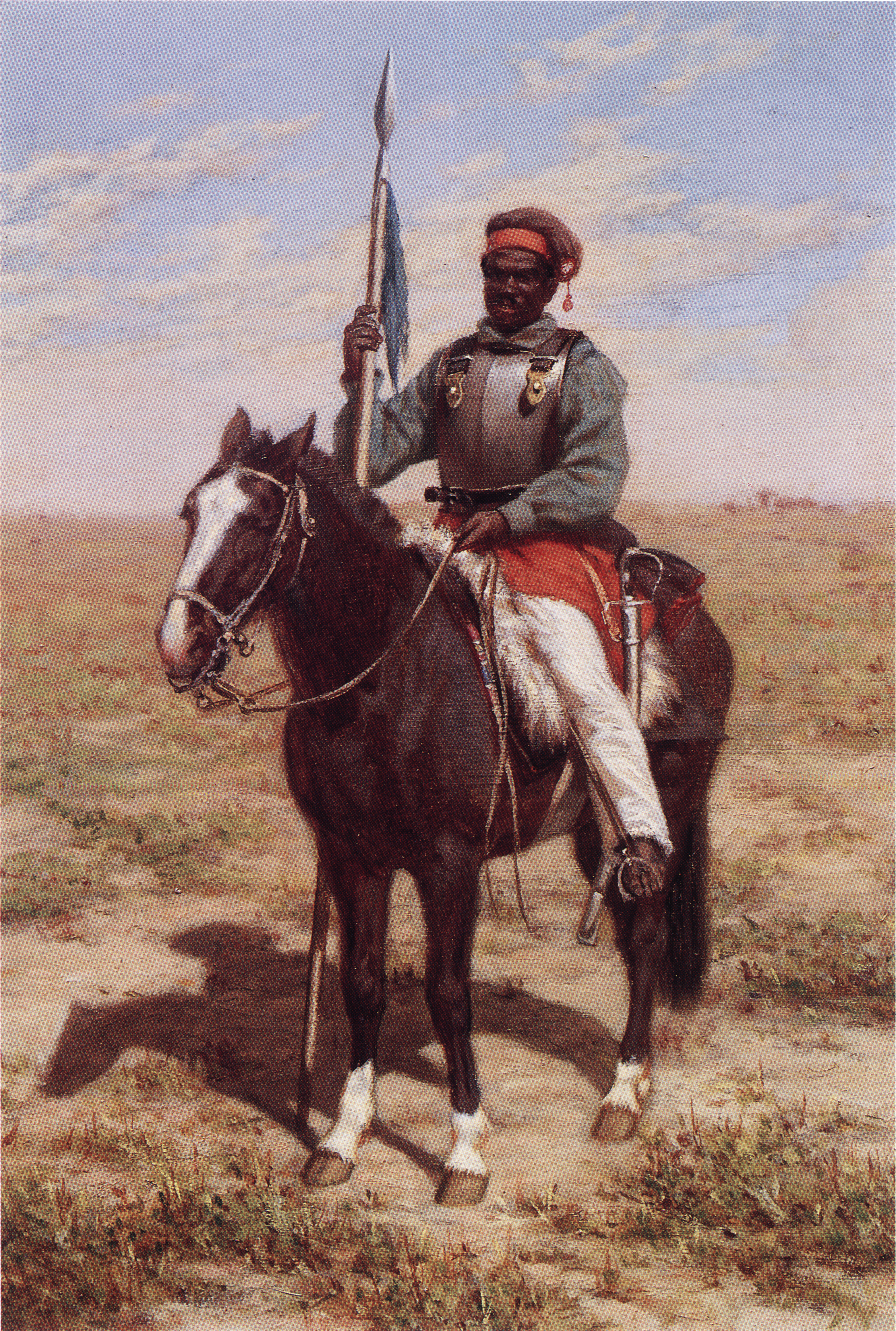
The Farroupilha Revolution (also known as the Ragamuffin War) was a prolonged political and military conflict fought in the southern province of Rio Grande do Sul between 1835 and 1845. Emerging in the turbulent decades following Brazilian independence, the rebellion developed within a wider crisis of imperial governance: provincial elites negotiated, resisted, and reshaped the reach of a still-consolidating central state. In Rio Grande do Sul, these tensions intersected with a frontier economy, militarized local society, and long-standing disputes over fiscal policy, military command, and the distribution of political authority.
Although often narrated through the lens of regionalism, the Farroupilha conflict cannot be reduced to a local episode. It mobilized competing projects of legitimacy and sovereignty, and it produced concrete experiments in rebel administration — taxation, policing, military recruitment, diplomatic representation, and everyday governance. The documentary record also reveals a war shaped by contingency: shifting alliances, internal factionalism, pragmatic negotiations, and the constant need to secure resources, transport, and communication across a vast territory.
1. Political background in the Empire of Brazil
The revolt unfolded during a period marked by political instability and the redefinition of the imperial order. Debates over decentralization, provincial autonomy, and the limits of central authority informed how actors justified rebellion, framed grievances, and negotiated reconciliation. In this context, political language often blended constitutional arguments with practical concerns: who could appoint commanders, collect revenue, regulate commerce, and enforce justice in a border province where military power and civil administration were deeply intertwined.
2. Rio Grande do Sul as a frontier society
Rio Grande do Sul was not only a peripheral province; it was a strategic frontier zone. Its economy depended on cattle-raising, charque production, and regional trade networks, while its society was shaped by mobility, militarization, and contested boundaries. These conditions affected both the causes and the course of the conflict. The war’s logistics — horses, troops, weapons, supplies, and routes — were inseparable from local landholding patterns, labor relations, and the ability of families and communities to sustain prolonged mobilization.
3. War and rebel government
The Farroupilha Revolution produced forms of rebel governance that combined improvisation and institutional ambition. Letters document administrative routines and urgent decisions: issuing orders, responding to reports, directing movements, negotiating provisions, and managing justice and policing. They also expose the human texture of governance during wartime, in which political ideals coexisted with scarcity, uncertainty, and the constant need to maintain authority across dispersed and often unstable local command structures.
.jpg)
4. A transnational conflict: Uruguay and the Río de la Plata
The rebellion’s trajectory was profoundly shaped by cross-border dynamics. Rio Grande do Sul was connected to Uruguay and the broader Río de la Plata world through kinship networks, exile routes, military circulation, and political negotiations. Farroupilha actors engaged with shifting factions across the border, relying on diplomacy, personal mediation, and strategic alliances. The correspondence preserved in the Varela Collection is especially valuable for reconstructing these interactions, since letters register not only formal positions but also informal channels of information and influence.
5. Why correspondence matters
Letters are not merely sources that “report” events; they are instruments that made the war governable. They record decisions in formation, conflicts in real time, and the practical work of sustaining authority through writing. For this reason, the Varela Collection — predominantly composed of personal and administrative correspondence— offers an exceptional entry point into the Farroupilha Revolution as lived political practice: negotiation, command, persuasion, and the management of networks across space.
Bibliography for this section
The references below indicate the main works that inform the historical synthesis presented in this section.
- Arquivo Histórico do Rio Grande do Sul. Anais do Arquivo Histórico do Rio Grande do Sul: Coleção Varela, vol. 2, t. 1, Correspondência ativa: documentos CV-1 a CV-558. Porto Alegre: Instituto Estadual do Livro, 1978.
- Guazzelli, Cesar Augusto Barcellos. O horizonte da província: a República Rio-Grandense e os caudilhos do Rio da Prata (1835–1845). São Paulo: Linus, 2013.
- Leitman, Spencer. Raízes sócio-econômicas da Guerra dos Farrapos. Rio de Janeiro: Graal, 1979.
- Menegat, Carla. Domingos José de Almeida, o estadista da República Riograndense: o casal Domingos José de Almeida e Bernardina Rodrigues Barcellos na Revolução Farroupilha. São Paulo: Instituto Memoria Editora, 2010.
- Menegat, Carla. “Homens de fronteira, homens de Império: discurso político, campanha militar e barganha na relação entre a Corte e pecuaristas brasileiros na fronteira meridional.” In Anais do Congresso Nacional da ANPUH, 11–32, 2017.
- Menegat, Carla. “Brasileiros e pecuária no norte do Uruguai: produção e mercado em meados do século XIX.” Mundo Agrario 21, no. 46 (2020): e131.
- Menegat, Carla. “‘Transportando fortunas para povoar deserta e inculta campanha’: brasileiros e produção pecuária no norte do Uruguai em meados do século XIX.” História Econômica & História de Empresas 23, no. 1 (2020): 63–95.
- Vargas, Jonas Moreira. “Um perfil da elite política rio-grandense e suas redes de relações com a classe dos grandes proprietários na fronteira sul (1845–1866).” In Fronteiras na história: atores sociais e historicidade na formação do Brasil Meridional (séculos XVIII–XX), organizado por Ângela Maria Schmitt e Maria D’Ajuda Alomba Ribeiro Winter, 166–190. Chapecó: Editora UFFS, 2021.
Correspondence as a historical source
Correspondence occupies a central place in the historical study of the nineteenth century, particularly in contexts marked by political instability, territorial fragmentation, and fragile institutional structures. Letters functioned simultaneously as instruments of communication, administration, negotiation, and authority, allowing actors to govern, coordinate, and justify actions across distance. In the context of the Farroupilha Revolution, written correspondence was not merely a record of events but a constitutive element of political and military practice.
The documents preserved in the Varela Collection reflect this multifunctional character. Personal letters coexist with administrative orders, reports, requests, and endorsements, often within the same exchange. These texts register decisions in formation, shifts in allegiance, logistical constraints, and strategies of persuasion, revealing how political authority was exercised through writing in a frontier society shaped by war, mobility, and negotiation.
From a historiographical perspective, correspondence offers access to temporal processes rather than retrospective narratives. Letters are produced under conditions of uncertainty: they anticipate outcomes, respond to incomplete information, and attempt to influence future actions. This makes them particularly valuable for reconstructing networks of interaction, chains of command, and the circulation of information, but also challenging to interpret when treated as isolated texts.
These characteristics make correspondence especially suited to a data-oriented approach. Letters are inherently relational documents: they presuppose senders and recipients, refer to places, events, institutions, and other individuals, and are embedded in sequences of exchange. Modeling correspondence as structured data allows these relations to be made explicit, connected across documents, and analyzed beyond the linear reading of individual texts.
In Varela Digital, correspondence is therefore treated not only as a textual genre but as a relational infrastructure. TEI/XML encoding captures the internal structure of letters and their editorial mediation, while semantic modeling expresses the historical relations articulated through writing—between persons, institutions, events, and places. This approach bridges traditional historical analysis and computational representation, enabling new forms of navigation, comparison, and interpretation grounded in the sources themselves.
The Varela Collection and its formation
The Varela Collection is the result of a long and layered process of accumulation rather than a single archival initiative. Its formation reflects successive moments of preservation, expansion, and institutionalization linked to the memory of the Farroupilha Revolution.
The core of the collection originated in the personal archive of Domingos José de Almeida, one of the central political leaders of the rebellion. During and after the conflict, Almeida preserved correspondence and administrative documents related to the revolutionary government and its networks. Although he intended to write a history of the Farroupilha Revolution, this project was never completed, and the documents remained within the family after his death.
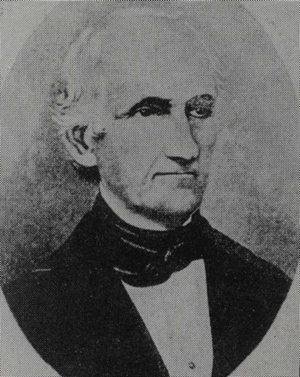
In the late nineteenth and early twentieth centuries, the archive was transferred to Alfredo Varela, who substantially expanded the original corpus by incorporating documents from other private sources. Through this process, a personal archive linked to a single political actor was transformed into a broader documentary collection associated with the rebellion as a whole. Varela’s collecting practices contributed to shaping both the scope of the collection and its retrospective interpretation.
In 1936, during the centennial commemorations of the Farroupilha Revolution, the collection was donated to the government of Rio Grande do Sul and incorporated into public custody. It was initially housed within the State Museum and later became part of the Arquivo Histórico do Rio Grande do Sul, established as an independent institution in 1954. From that moment on, the collection underwent processes of archival organization, description, and editorial mediation, culminating in its publication in the Anais do Arquivo Histórico do Rio Grande do Sul.
Recognizing this trajectory is essential for interpreting the documents preserved in the Varela Collection. The corpus reflects multiple historical layers: the immediacy of revolutionary correspondence, the logic of a personal archive, the interventions of a private collector, and the institutional frameworks of twentieth-century archival preservation. Varela Digital engages with this complexity by treating the collection as a historically constructed object, rather than as a neutral repository of sources.
Bibliography for this section
- Arce, Ana Inês. Os “venerandos restos da sublime geração farroupilha, que andei a recolher de entre o pó das idades”: uma história arquivística da Coleção Varela. Trabalho de Conclusão de Curso em Arquivologia, Universidade Federal do Rio Grande do Sul, 2011.
- Silva, Camila. Arquivo, história e memória: o processo de constituição e patrimonialização de um acervo privado – a Coleção Varela AHRS, 1858–1936. Tese de Doutorado em História, Universidade do Vale do Rio dos Sinos, 2019.
The Anais do Arquivo Histórico do Rio Grande do Sul and the pilot corpus
The Anais do Arquivo Histórico do Rio Grande do Sul constitute the principal editorial gateway through which the Varela Collection has been made accessible to researchers. Published over several decades, the series presents transcriptions of archival documents accompanied by editorial mediation, contextual notes, and standardized document identifiers.
The present project begins with Volume II of the Anais, published in 1978, which is the first volume to include documents from the Varela Collection related to the Farroupilha Revolution. This volume contains the initial segment of the active correspondence, numbered CV-1 to CV-558, and establishes the editorial conventions that structure subsequent volumes of the series.
Although the Secretariat of Culture of Rio Grande do Sul has made the volumes of the Anais available online in PDF format, the digital reproduction of Volume II is incomplete, and the printed edition has long been out of circulation. These conditions limit accessibility and reuse, particularly for systematic analysis, indexing, and cross-document research.
For methodological reasons Varela Digital focuses on a pilot corpus of 300 documents, corresponding to CV-1 through CV-300. This selection allows for the full implementation and testing of editorial encoding, semantic annotation, and data modeling workflows, while remaining representative of the documentary typologies, authors, and historical contexts present in the collection as a whole.
By re-encoding this pilot corpus as a structured digital edition and knowledge-oriented resource, the project does not aim to replace the Anais, but rather to complement them. The digital edition preserves the editorial mediation of the printed volumes while extending their analytical potential through machine-readable structure, explicit semantic relations, and future visualizations.
From context to digital modelling
The historical characteristics of the Varela correspondence—its relational density, its administrative hybridity, and its grounding in everyday political practice—directly inform the digital modelling choices adopted in Varela Digital. Rather than treating letters as isolated textual artifacts, the project approaches them as nodes within a broader historical system composed of people, institutions, places, events, and acts of communication.
This perspective motivates the combined use of TEI/XML encoding and Linked Open Data technologies. TEI provides a structured representation of the textual and editorial features of each document, preserving the organization of the printed edition while making explicit elements such as senders, recipients, dates, places, and internal textual divisions. At the same time, semantic modelling enables the representation of historical relations expressed in the correspondence—social, institutional, political, and event-based—across documents and beyond the boundaries of individual letters.
By translating historically grounded entities and relations into interoperable data models, Varela Digital transforms contextual knowledge into a navigable and extensible research environment. This approach supports advanced indexing, cross-document exploration, and future visualizations of spatial circulation and social networks, while remaining anchored in the close reading and critical interpretation of primary sources.
The result is a knowledge-oriented digital edition in which historical context and digital structure are not separate layers but mutually reinforcing components. Modelling becomes an interpretative act, shaped by historiographical questions and archival realities, and the digital edition functions not only as a medium of access but as a tool for historical inquiry.