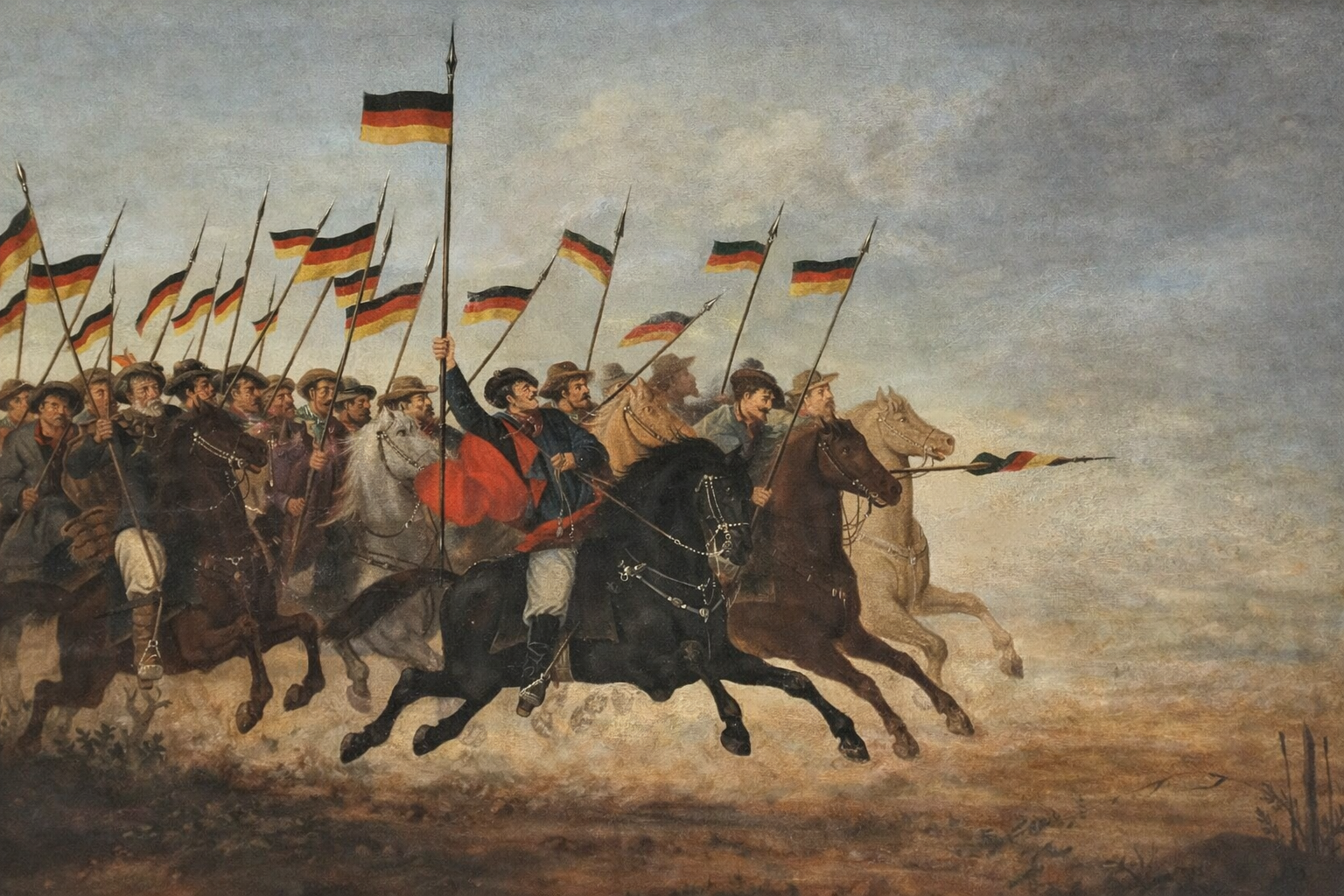
Varela Digital
Varela Digital is a digital scholarly edition and knowledge website dedicated to the correspondence preserved in the Varela Collection. The project focuses on political, military, and social communication during the Farroupilha Revolution (1835–1845), using letters and related documents as evidence for reconstructing historical actors, places, and relationships.
The pilot corpus is based on the documents published in Volume II of the Anais do Arquivo Histórico do Rio Grande do Sul. In this edition, each document is encoded in TEI–XML with consistent editorial practices, including the expansion of abbreviations, the marking of named entities (people, places, organizations, events, dates), and the explicit representation of editorial interventions when they are necessary to clarify the reading.
To support access and analysis, the project adopts a reproducible workflow that transforms TEI into web-readable HTML via XSLT, and progressively aligns documentary evidence with structured metadata and linked data outputs (RDF / JSON-LD). The website’s viewer presents a reading-oriented transcription and an AI-assisted English translation intended exclusively as an accessibility aid, while standoff files centralize authority entries for entities so that references can be explored consistently across the corpus. In later stages, the same model will enable spatial and network-based visualizations of correspondence flows and historical relations grounded in the source texts.
The Farroupilha Revolution and the Varela's Collection
The Farroupilha Revolution (1835–1845) was one of the longest and most complex armed conflicts in nineteenth-century Brazil. Far from a homogeneous or isolated uprising, it unfolded within a broader South American context marked by civil wars, fragile state formation, and intense political negotiation across borders. In the southernmost province of the Brazilian Empire, competing projects of autonomy, federalism, and political legitimacy intersected with military mobilization and everyday governance.
Rather than approaching the conflict solely through institutional or military narratives, Varela Digital adopts correspondence as a privileged historical source for understanding the Farroupilha Revolution. Letters reveal how political authority, military command, family ties, and personal trust were articulated in practice, often under conditions of uncertainty, mobility, and territorial fragmentation. The domain of this project is therefore not only the revolution as an event, but the dense web of social, political, and administrative relations that sustained it over a decade.
The corpus of Varela Digital is drawn from the Varela Collection, a documentary set formed in the nineteenth century and later incorporated into the holdings of the Arquivo Histórico do Rio Grande do Sul. The collection is composed predominantly of personal and administrative correspondence exchanged among political leaders, military officers, civil authorities, and family members during the Farroupilha period. These documents offer a privileged perspective on both high-level decision-making and the everyday management of war, territory, and social relations.
The pilot corpus is based on the published edition of the Varela Collection in the Anais do Arquivo Histórico do Rio Grande do Sul. The project begins with Volume II of the Anais, as this is the first volume to include documents from the Varela Collection itself. Although later volumes expand and complement the set, Volume II constitutes the earliest systematic publication of these materials and provides a coherent starting point for a digital scholarly edition. Working from this printed edition allows the project to address both the editorial legacy of the Anais and the possibilities of re-encoding, modeling, and recontextualizing the documents within a digital environment.
What you can explore
- Read the collection in sequence: open the Viewer and navigate the documents following the order of the collection.
- Browse indexes: access document lists by sender, recipient, place and date of sending, document ID, and—later—by mentioned people and places.
- Project documentation: consult the editorial workflow, encoding decisions, and data modeling choices underlying the digital edition.
- Historical context: read an expanded introduction to the Farroupilha Revolution and to the formation of the Varela Collection.